

Hondureño Shipwreck in Isla Mujeres

Updated: May 10, 2025

Near Isla Mujeres, you can find the shipwreck of The Hondureño, a massive shrimp boat that sank while trying to escape one of the island's most ferocious hurricanes. The site is located not far from North Beach and offers excellent visibility, but due to the challenging conditions, it is best suited for experienced divers.
The Hondureño is a shipwreck on the National Park's outskirts, just 3 kilometres (2 miles) from North Beach. A quick 25-minute boat ride will take you to the remains of this large shipwreck, one of the biggest in the area. Once a remarkable 36-meter (120-foot) shrimp boat, it has a poignant history.
Unlike many other shipwrecks around Isla Mujeres, which were intentionally sunk to create artificial reefs and dive sites, the story of the Hondureño is different. This ship fell victim to Hurricane Gilbert in 1988, one of the strongest hurricanes to strike the area. The captain was out in the open ocean during the fierce storm and attempted to outrun it, but tragically, the boat sank while battling the relentless waves. Hurricane Gilbert devastated the island, and the locals still remember this event vividly.

The wreck is located 21 meters (70 feet) below the surface and offers excellent visibility of up to 20 meters (65 feet), making it a fantastic yet challenging dive site. Due to its depth and the often medium to strong currents, this location is recommended for advanced or experienced divers.
The wreck's remains have become a habitat for a diverse array of marine life. While diving at this site, you can expect to encounter various species, such as cobia fish, rainbow parrotfish, stonefish, green moray eels, nurse sharks, and, like all the wrecks around the island, it is a popular spot for eagle rays.
Depth
21 meters / 70 feet
Boat Ride
20-25 min
Dive Type
Drift - Medium to Strong Current
Deep Dive
Artificial Reef - Wreck
Experience Level
Advanced Open Water, Experienced Diver
Recent Dive Experience
Average Visibility Underwater
20 mt / 65 feet
Average Water Temp
26 C°/ 79F°
Dive Time
30-35 min (Safety Stop Required)
Hondureño shipwreck with lots of fish 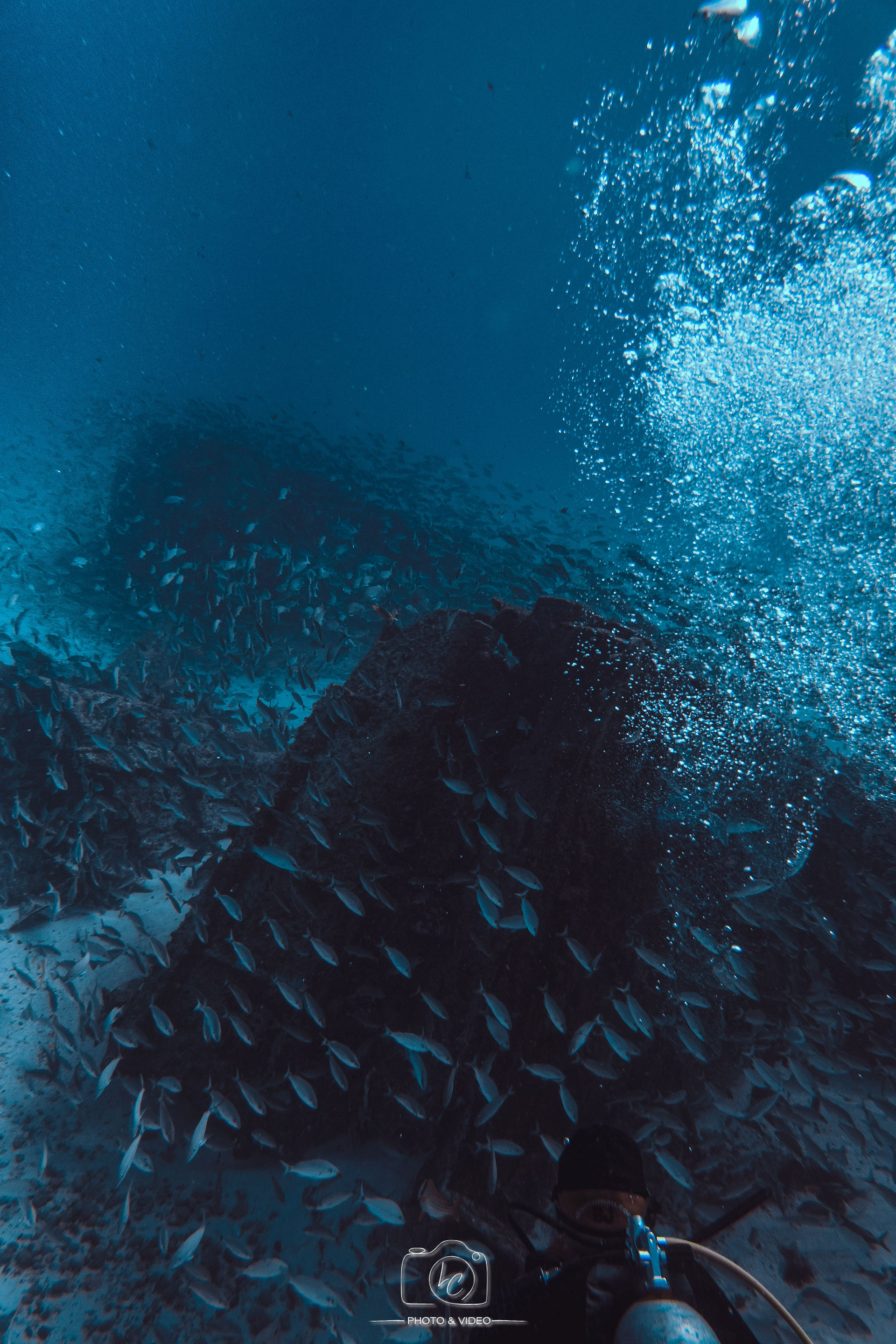
Diver at Hondureño shipwreck, Isla Mujeres with lots of fish 
Hondureño shipwreck, Isla Mujeres in pieces Diver at Hondureño shipwreck with fish 
Diver at Hondureño shipwreck, Isla Mujeres 
Diver with shipwreck Hondureño in Isla Mujeres 
Diver with fish at shipwreck Hondureño 
Diver at shipwreck Hondureño 
Diver amongst fish at Hondureño shipwreck 
Diver under shipwreck, Hondureño, Isla Mujeres 
Diver at shipwreck with fish 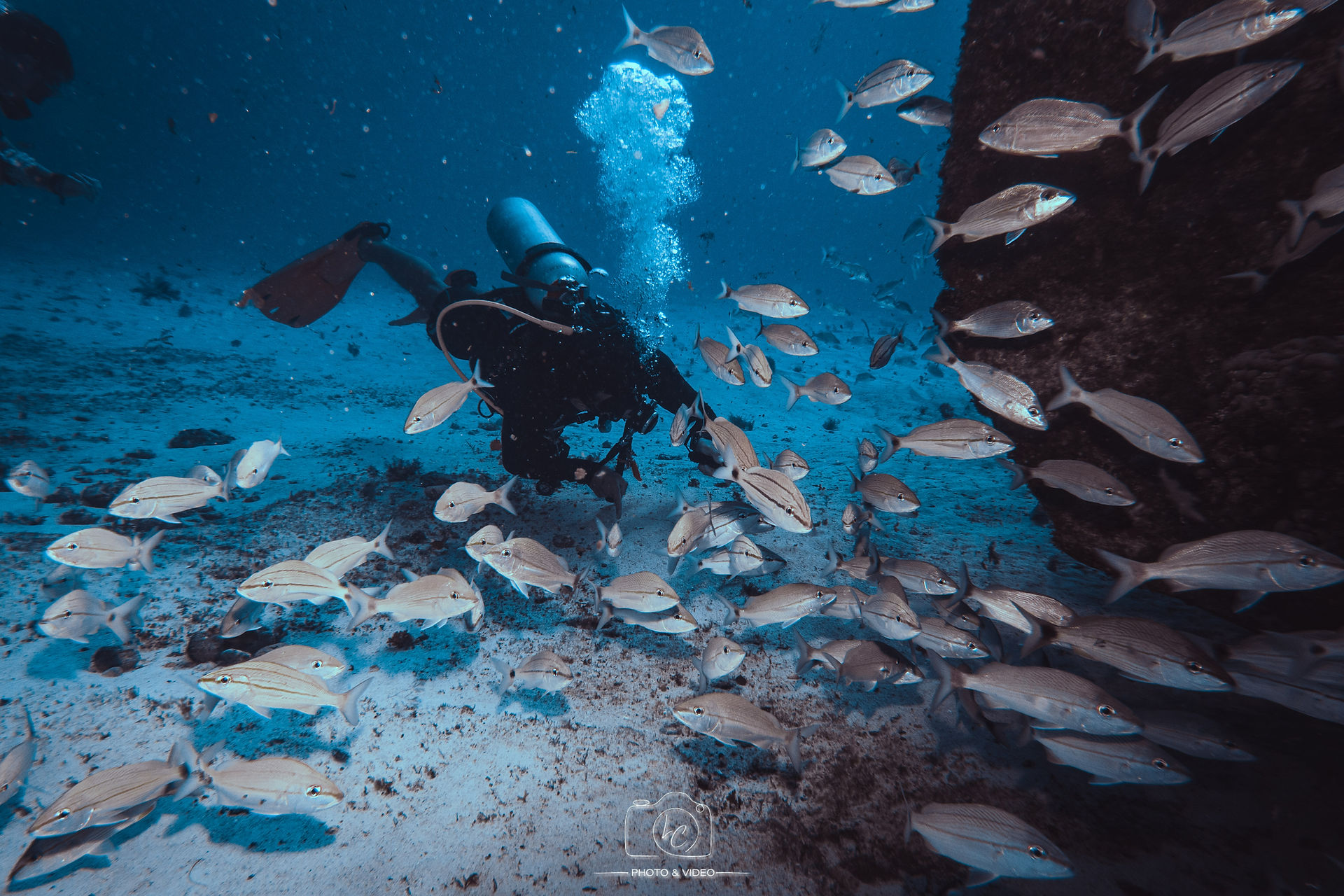
Diver and fish at shipwreck Hondureño, Isla Mujeres 
Diver and Hondureño shipwreck Isla Mujeres 
Lots of fish at shipwreck, Hondureño. Isla Mujeres 
Dark eerie photo of shipwreck, Hondureño in Isla Mujeres 
Shipwreck Hondureño in parts in Isla Mujeres

Tracy Gunn is the founder and owner of Pocna Dive Center on Isla Mujeres, Mexico. A former banker turned adventurer, Tracy left a decade-long corporate career to pursue her passion for diving and island life. With over 35 years of diving experience and 24 years of living on Isla Mujeres, she now serves as a PADI Course Director, training the next generation of divers at her dive school. When she’s not underwater, Tracy shares her love for the island and the ocean through engaging blogs about diving, marine life, and the culture of Isla Mujeres.
Interested in reading more from this author?
Blogs about Isla Mujeres, Mexico, and Recreational Scuba Diving: click here
Blogs about Instructor Development Courses and Professional Scuba Diving: click here


That's a fascinating piece of maritime history—Isla Mujeres holds so many stories. For entertainment during your research or travels, you can descargar magis apk para android to enjoy movies and shows on the go. Both history and media enrich our understanding of the world. Thanks for sharing!
That sounds like a fascinating historical topic—shipwrecks always carry intriguing stories. For planning any travel or financial aspects related to such trips, you can use maksukalkulaator 2026 to calculate taxes easily. Both exploration and planning go hand in hand. Thanks for sharing!
the history of the hondureño is a sobering reminder of hurricane gilbert's power. the article clearly outlines the dive conditions, which is helpful for planning. the depth and currents mentioned make it clear this is not a casual dive. it's interesting how the wreck, born from tragedy, now supports such vibrant marine life, including eagle rays and nurse sharks. Lyrics Into Song
xosoplus.mobi dạo này mình thấy bạn bè nói qua nên ghé thử cho biết, kiểu vào xem giao diện họ làm ra sao thôi. Vừa mở lên là thấy tiêu đề chuyên mục XSMB theo ngày đặt khá rõ, có dòng nhắc đúng “XSMB ngày 19 07 2026” nên mình khỏi phải đoán đang ở kỳ nào. Mình cũng để ý họ trình bày số liệu theo khối nhìn gọn, đặc biệt phần “Đầu lô tô Đuôi lô tô” tách riêng như một bảng nên lướt nhanh vẫn nắm được, không bị chữ số dồn vào một cục. Cuộn xuống chút là thấy mấy cụm thống kê đặt theo nhóm, nhìn khá dễ chịu. Nói chung mình thích kiểu họ…
the history of the hondureño is a sobering reminder of hurricane gilbert's power. the article clearly outlines the dive conditions, which is helpful for planning. the depth and currents mentioned make it clear this is not a casual dive. it's interesting how the wreck, born from tragedy, now supports such vibrant marine life, including eagle rays and nurse sharks. Image to Image AI